
Jesus Christ: Savior or Satan?
A Mythic Narrative
Before names hardened into doctrine, before heaven was diagrammed and hell was fenced, there was a Word that walked the edge of all things.
He was not born into light.
He entered it.
And beneath the light—coiled and patient—waited the Serpent.
I. The Light That Casts a Shadow
In the beginning of the age, the Word descended clothed in mercy. Wherever he walked, the sick healed, the blind saw, the broken rose. And the people said, This is goodness itself.
But goodness, untested, is innocence.
And innocence cannot rule a world that knows blood.
So the Word kept walking—past praise, past safety—until the shadow lengthened behind him.
The elders whispered:
“Light casts a shadow.”
The fearful replied:
“Then the shadow must be evil.”
But the Word answered nothing.
II. The Serpent in the Wilderness
When the people cried out from their suffering, they remembered an older story:
A time when poison ran through their veins, and salvation came not by denial—but by looking directly at the serpent lifted high.
The Word spoke quietly:
“As the serpent was lifted, so must I be lifted.”
The crowd recoiled.
Why speak of serpents?
Why borrow the language of the adversary?
But the Serpent, ancient and watchful, stirred—not in triumph, but recognition.
For the Serpent knew this law better than any angel:
What is denied returns as a tyrant.
What is faced can be transformed.
III. The Accuser Approaches
In the deep places between worlds, the Accuser came.
“You claim to be light,” the Accuser said, “yet you speak my symbols. You wield judgment. You promise fire.”
The Word met his gaze.
“I do not deny you,” he said.
“But neither do I serve you.”
The Accuser laughed. “Then you must carry me.”
And so the Word did the unthinkable.
He took the weight of accusation.
He bore the violence, the pride, the wrath.
He let the shadow pass through him instead of outward from him.
This was the scandal of heaven.
IV. The Cross: Where Opposites Meet
When the Word was lifted, the world saw only contradiction:
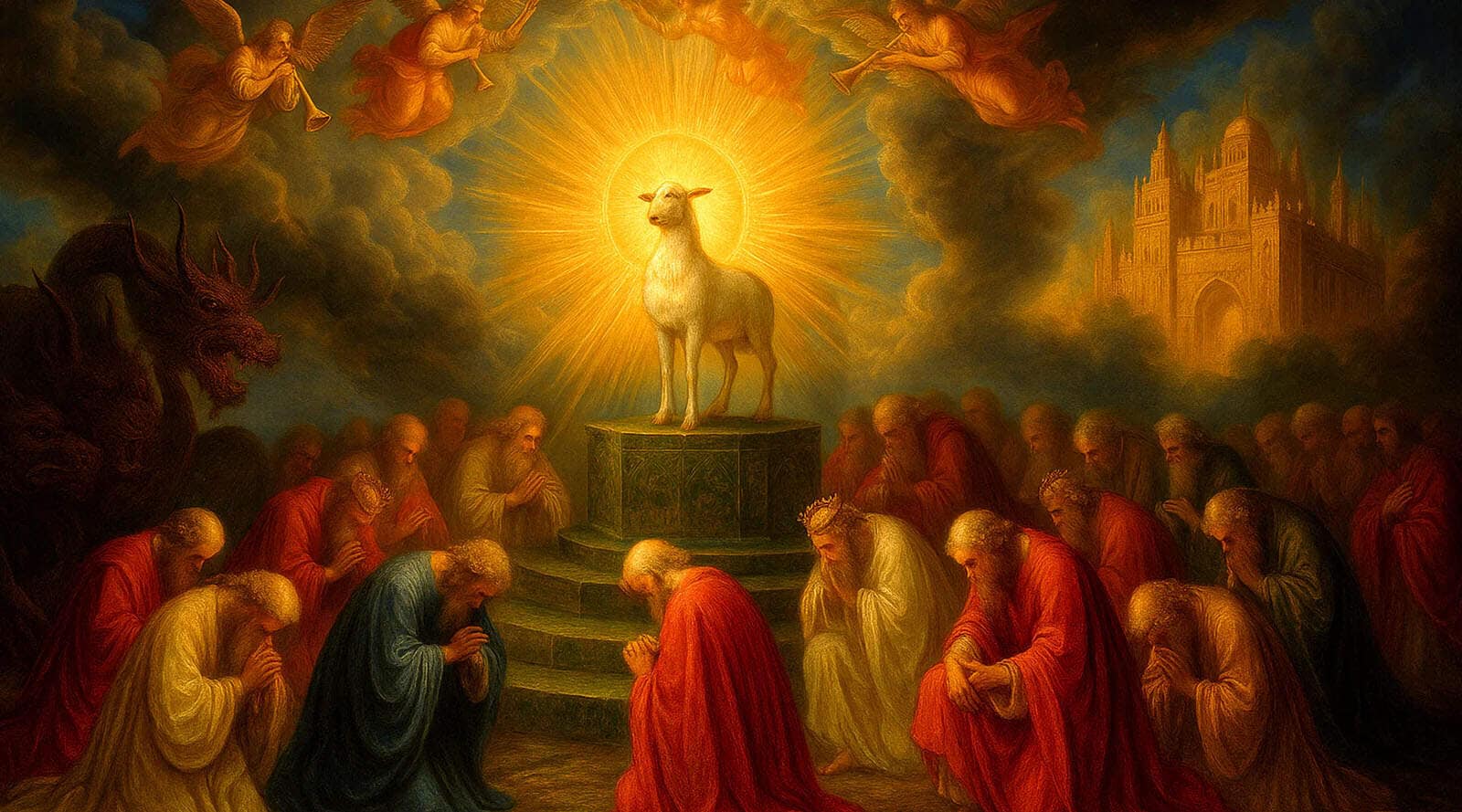
A lamb that judged
A king that bled
A savior who entered death willingly
Some cried, “This is evil revealed!”
Others whispered, “This is love made terrifying.”
But the truth was deeper still.
On the cross, the Word did not become the Serpent.
He contained it.
Wrath did not rule him.
Darkness did not possess him.
Judgment flowed through love, not against it.
This was the integration the cosmos had never seen.
V. Descent Into the Depths
For three days—or for ages beyond counting—the Word descended.
Not to rule the abyss.
Not to bargain with it.
But to walk it without being consumed.
The shadows recoiled.
The Accuser fell silent.
For the abyss had met something new:
Power that did not fragment.
Authority that did not repress.
Light that did not lie about the dark.
The Serpent bowed—not in worship, but in surrender of function.
Its role was finished.
VI. The Morning Star Rises
When the Word rose, he bore a title older than fear:
Morning Star.
Not the light that blinds,
but the light that appears after the longest night.
Some trembled.
“If he carries the shadow,” they said,
“how do we know he is good?”
The answer echoed like thunder and whisper at once:
Because the shadow obeys him.
VII. The Pattern for Humanity
And so the myth was sealed—not as doctrine, but as invitation.
The Word did not ask humanity to deny its darkness.
Nor to worship it.
Nor to project it onto monsters.
He asked them to do the harder thing:
To face it
To name it
To subordinate it to love and truth
This was the true kingship.
This was the divine masculine made whole.
This was wisdom walking hand-in-hand with power.
Epilogue: The Question Reframed
So—was he Savior or Satan?
The myth answers gently:
He was the Savior because he walked where Satan could not rule.
He was the Light because the darkness did not own him.
He was the King because the Serpent no longer whispered from the throne.
And the world was changed—not by erasing the shadow,
but by placing it beneath conscious, compassionate authority.
And that is why the Morning Star still rises.